How Much Does Hardwood Flooring Installation Cost in St. Johns County? 2026 Price Guide
28 de July de 2026
A flawless floor starts underneath it. To prepare a concrete slab subfloor in a Florida home, you must clean it, level it, test it for moisture, and seal it if needed before any flooring goes down. Skipping these steps is the number-one cause of failed installs in slab-built homes around Orange Park, Fleming Island and Mandarin.
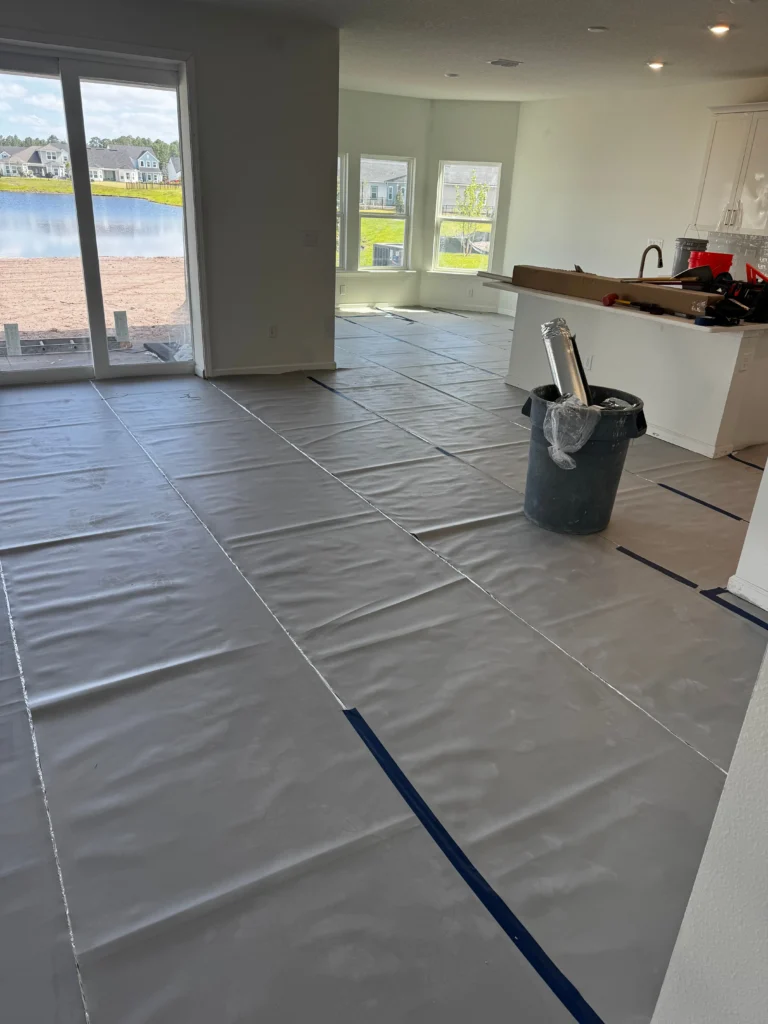
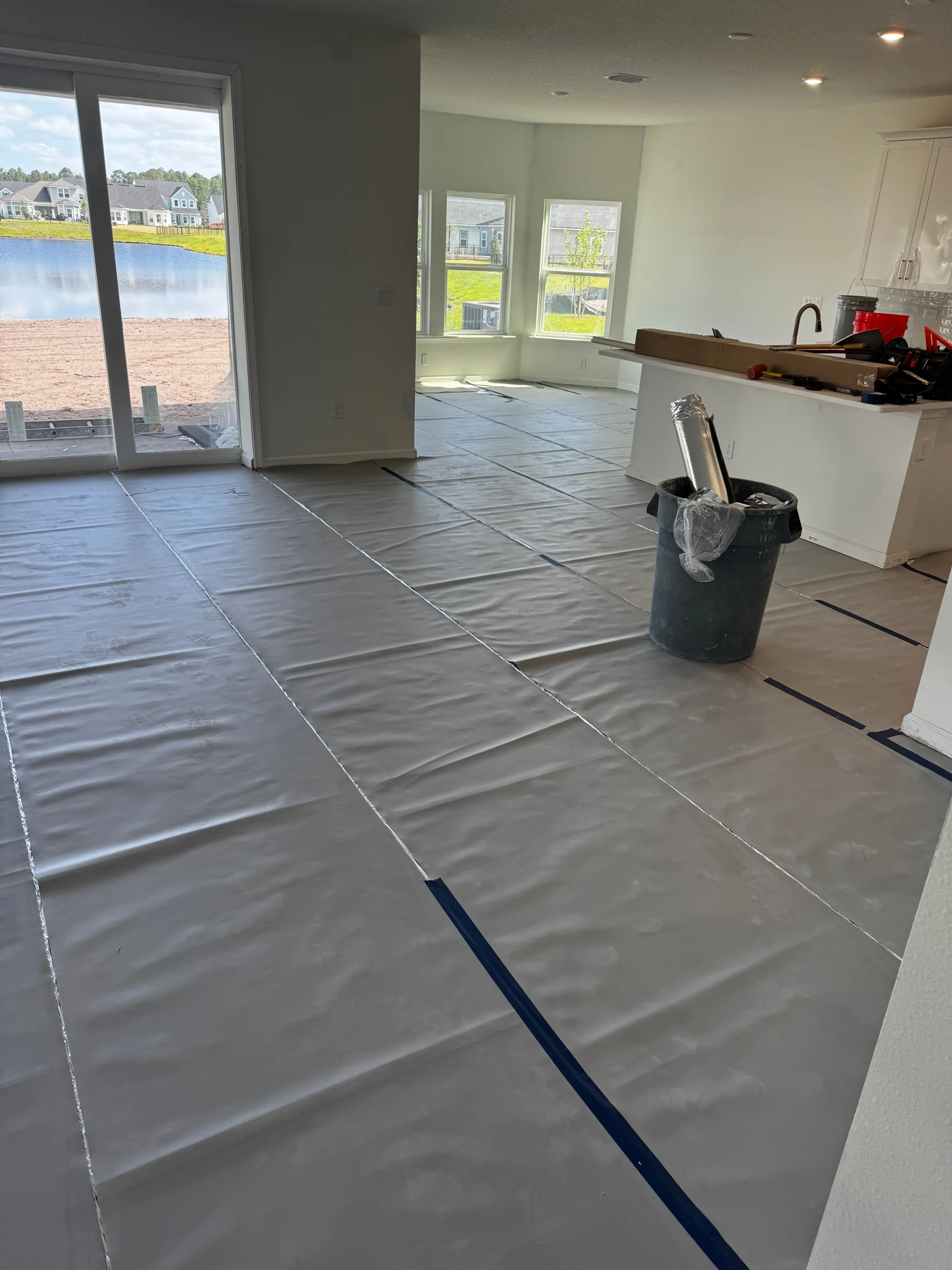
Most Northeast Florida homes are built on concrete slabs poured close to humid, sandy soil. Concrete naturally wicks moisture upward, and trapped vapor can ruin glued or floating floors from below, causing warping, adhesive failure and mold. Proper prep stops that before it starts.
Remove all old flooring, adhesive residue, paint and debris. The slab must be bare so new materials bond and sit correctly. Old cutback adhesive in particular needs to be ground off.
Check for structural cracks, spalling and low spots. Minor cracks can be filled, but active or widening cracks should be evaluated before you build a floor on top of them.
Moisture testing is the single most important step on a Florida slab. A calcium chloride test or relative humidity probe tells you whether the slab is dry enough for your chosen flooring and adhesive.
If moisture is too high, a moisture-mitigation coating or vapor barrier is applied so the floor above stays protected. Never glue down wood or install over a slab that fails a moisture test without mitigation.
Self-leveling compound fills low spots and high humps so the finished floor is flat. Industry tolerance is roughly 3/16″ over a 10-foot span; rigid LVP and tile are especially unforgiving of an uneven slab.
Let leveling compound fully cure, then vacuum again. A clean, dry, flat slab is the foundation every quality installation depends on.
Floating floors like luxury vinyl plank over a slab usually need a vapor barrier or moisture-resistant underlayment for cushioning, sound and protection. The right product depends on your flooring type and the slab’s moisture level.
Whether you’re planning hardwood floors or LVP, moisture testing, grinding and self-leveling take specialized tools and experience. A local crew that knows Florida slabs can prep correctly the first time and protect your flooring warranty.
Concrete slab subfloor prep for Florida homes
Almost always. Florida slabs release moisture, so a vapor barrier or moisture-resistant underlayment is strongly recommended to protect floating and wood floors.
Pros use a calcium chloride test or an in-slab relative humidity probe. These give a real reading, unlike simply touching the surface, which can feel dry while the slab is still wet inside.
Yes, once it’s clean, level, dry and moisture-tested. LVP, tile and engineered wood all work over a properly prepared slab; solid hardwood generally does not.
A common standard is no more than about 3/16 inch of variation over 10 feet. Rigid planks and tile require an especially flat slab to avoid hollow spots and cracking.
Ready to upgrade your floors in Orange Park or Fleming Island? RM Infinity Floors offers free, no-pressure estimates across Jacksonville and Northeast Florida. Call or text us today at (904) 586-6642 and get a fast, honest quote from a local installer who knows Florida homes.